How to Layout an Open Floor Plan: A Practical Guide for Functional Living
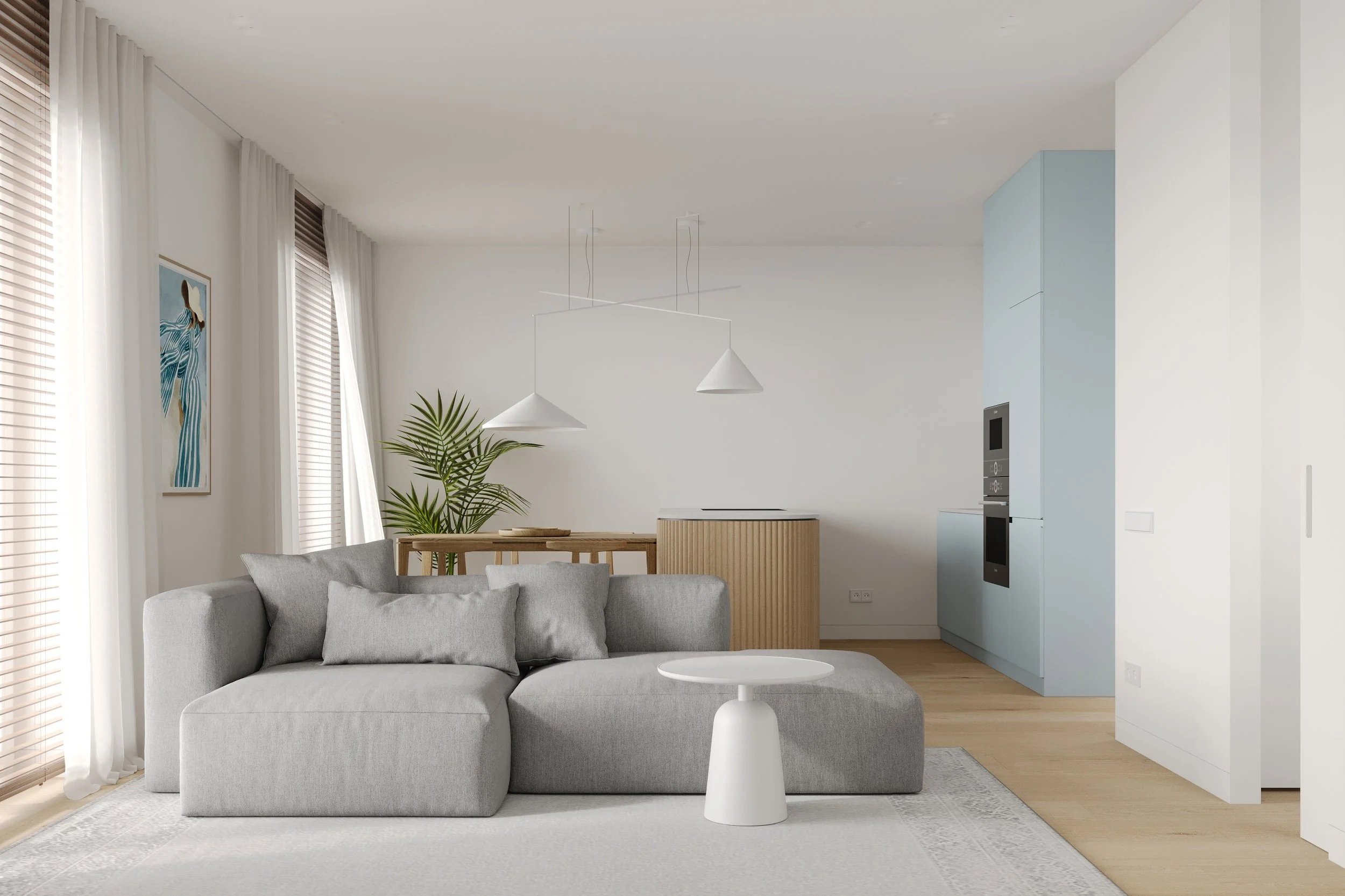
Functional Open-Plan Kitchen Living Space with Muted Blue Cabinetry
Open-plan living is one of the most requested layouts in modern homes. Whether you are planning a kitchen extension, removing internal walls, or redesigning your ground floor, knowing how to layout an open floor plan correctly is essential for both functionality and flow.
A well-designed open-plan space should feel connected — but never chaotic.
Here’s how to approach it strategically.
1. Start With Function, Not Furniture
Before thinking about sofas or dining tables, define how the space needs to work.
Ask yourself:
How many people will use the space daily?
Is it primarily for family living, entertaining, or both?
Do you need quiet zones within the open layout?
Where is natural light coming from?
Open-plan design is not about “removing walls.” It’s about creating purposeful zones within one connected volume.
2. Define Clear Zones Within the Open Space
Every successful open-plan layout includes clearly defined zones, even without physical walls.
Typical open-plan kitchen–dining–living zones include:
Cooking zone (kitchen)
Dining zone
Relaxation zone (sofa / TV area)
Circulation pathways
Each zone should have enough breathing space around it. Overlapping functions create visual and practical confusion.
3. Prioritise Circulation and Flow
One of the most common layout mistakes is blocking natural movement paths.
In an open floor plan:
Walkways should feel intuitive.
You should not walk through the middle of a sofa area to reach the garden.
Kitchen work zones should not interfere with circulation routes.
Good space planning ensures smooth movement between zones without disrupting their function.
4. Use Furniture to Shape the Layout
In open-plan design, furniture acts as subtle architectural boundaries.
For example:
A kitchen island separates cooking and dining areas.
A sofa can define the edge of the living zone.
A console table can create a soft transition between spaces.
You don’t need walls — but you do need structure.
5. Consider Proportion and Balance
Open spaces can easily feel either overcrowded or empty.
To achieve balance:
Scale furniture appropriately to the room size.
Avoid pushing everything against the walls.
Ensure each zone has visual weight.
Proportion is what makes an open-plan space feel intentional rather than accidental.
6. Plan Storage Early
In open-plan living, clutter is always visible.
Integrated storage, tall cabinetry, and concealed solutions are essential to maintain a calm and cohesive environment.
Particularly in open-plan kitchen–dining layouts, storage planning should be part of the layout stage — not an afterthought.
7. Think About Structural Possibilities
If you’re planning a renovation or extension, consider:
Which internal walls are load-bearing?
Can openings be widened?
Would relocating doors improve flow?
Is a structural beam required for full openness?
Open-plan layout design often involves structural considerations, so it’s important to resolve layout options before construction begins.
8. Create Cohesion Through Design Direction
Even though the space is zoned, it should feel visually unified.
Use:
Consistent flooring
Harmonised material palette
Complementary lighting schemes
A successful open-plan layout is cohesive but not repetitive.
Final Thoughts: Open-Plan Living Requires Strategy
An open floor plan should feel effortless — but achieving that balance requires thoughtful space planning.
Before committing to building works, it’s always worth exploring layout options professionally to ensure:
Circulation works
Zones are proportioned correctly
Storage is integrated
Structural changes are considered
When done well, an open-plan layout can completely transform how your home feels and functions.
If you have a project in mind, submit a project enquiry and let’s shape your space with intention from the start.
