What Does Open Plan Mean?
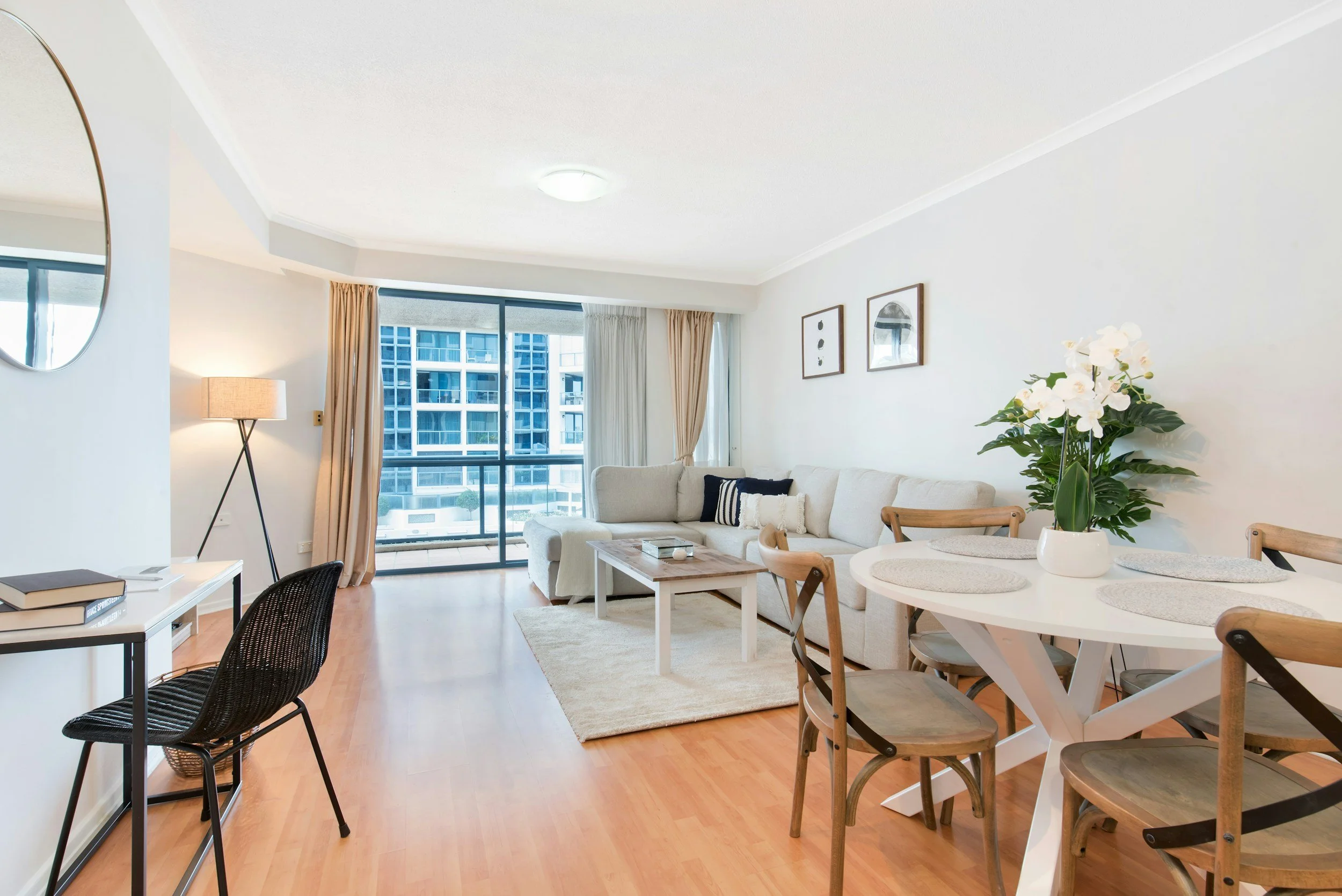
Open-Plan Kitchen Dining Living Room
Open plan means connected spaces with clearly defined zones — not just one big room with the walls knocked out. Removing walls is only the first step; without thoughtful layout planning, a large open space can quickly feel awkward and hard to use. This guide covers how open-plan design actually works, the mistakes to avoid, and how designers create structure without walls.
If you search for “open plan layout,” many explanations say the same thing: remove walls to create one big space.
But in reality, open-plan design is not simply about knocking down walls. When designed properly, it’s about creating a multifunctional space with clearly defined zones that still feel connected and cohesive.
As a residential interior designer specialising in space planning and layout design, I often work with homeowners who want to open up their homes. Still, many misunderstand what an open plan really means.
Let’s break it down.
What Does Open Plan Actually Mean?
An open-plan layout is a multifunctional space where several areas — typically the kitchen, dining, and sometimes living areas — are connected without full walls separating them.
However, that doesn’t mean everything becomes one undefined room.
A well-designed open-plan space includes distinct functional zones that work together visually and practically.
In simple terms:
Open plan = connected spaces + clear zones + good circulation.
The goal is to allow different activities to happen in the same space while maintaining clarity, flow and functionality.
The Most Common Misconception About Open-Plan Layouts
When clients first say they want an open-plan layout, they usually mean removing walls to create one large space.
The most common misunderstanding is assuming that once the walls are gone, the layout will automatically work.
In reality, removing walls is only the first step.
Without proper planning, a large open room can easily become:
awkward to use
visually messy
dominated by the kitchen
difficult to move through comfortably
This is where thoughtful space planning becomes essential. The real design challenge is not removing walls — it’s organising the space so each area works naturally within the whole room.
The Three Biggest Mistakes in Open-Plan Layouts
From my experience designing open-plan kitchens and living spaces, I often see three common mistakes.
Poor zoning
When zones are not clearly defined, the space can feel confusing and disorganised. For example, the dining table may end up floating awkwardly between the kitchen and living area without a clear purpose.
Circulation cutting through seating areas or the kitchen
Poor layouts often create pathways that run directly through the seating area or even through the kitchen triangle, interrupting both cooking and relaxing zones.
A well-designed layout always prioritises clear circulation routes.
The kitchen dominates the room
Because kitchens contain cabinets, appliances and lighting, they naturally draw visual attention. Without careful planning, the kitchen can overpower the entire space and make the living or dining zones feel secondary.
Good open-plan design strikes a balance among all zones. Read How to Layout an Open Floor Plan.
How Designers Create Zones Without Walls
Since open-plan spaces don’t rely on walls to define rooms, designers use other tools to create clear zones.
In my projects, I often use:
Kitchen islands to separate cooking and social areas. Read How to Size a Kitchen Island Properly
Dining table placement to anchor the dining zone
Rugs to visually define the living area
Lighting to highlight each zone
Furniture orientation to guide movement and circulation
These elements allow each area to feel intentional while still maintaining the openness of the space.
The Benefits of an Open-Plan Layout
When designed well, open-plan layouts can significantly improve how a home feels and functions.
Many of my clients notice these benefits once the space is complete.
A stronger sense of space
Removing walls allows natural light to travel through the room, making the space feel larger and more open.
Easier circulation
Instead of moving through multiple smaller rooms, the layout becomes more intuitive and fluid.
More organised storage
When the space is designed carefully, storage can be integrated more efficiently within the kitchen and surrounding zones.
Greater everyday efficiency
Cooking, dining and socialising happen within a single connected environment, making daily routines much easier.
What Rooms Are Usually Included in an Open-Plan Layout?
The most common open-plan combination in residential homes is:
Kitchen + dining area
Interestingly, many homeowners in the UK still prefer to keep the living room separate.
One reason is cooking smells and appliance noise, which can travel through the space if the living area is directly connected to the kitchen.
How to Manage Cooking Smells in Open-Plan Kitchens
Cooking smells are one of the most common concerns when designing open-plan kitchens.
There are several ways to manage this.
One of the most effective solutions is installing a powerful extractor hood with noise reduction.
In homes with enough space, another option is creating a secondary “micro kitchen” or utility cooking area behind a door. This smaller space can be used for frying or grilling without bringing smells into the main open space.
It also works well as a “dirty kitchen” zone, helping keep the main kitchen clutter-free when entertaining.
How Much Space Do You Need for an Open-Plan Layout?
Many homeowners assume open-plan layouts require huge rooms, but they can work well even in moderate spaces.
From my experience, a comfortable open-plan kitchen and dining area can work within around 24–25 square metres.
For example:
4 m × 6–6.5 m works well for a kitchen and dining zone
adding around 10–12 m² (approximately 3 m × 4 m) can allow space for a living area if needed
The biggest issue occurs when people try to fit too many functions into a space that is too small.
Good open-plan design is about balance, not just openness.
Frequently Asked Questions About Open-Plan Layouts
What is the difference between open plan and open concept?
Open plan and open concept are often used interchangeably. Both describe layouts in which walls between rooms are removed to create a larger, connected space. In residential design, an open plan usually focuses more on how the space functions, while an open concept often refers to the visual openness of the layout.
Is open-plan living still popular?
Yes, open-plan layouts remain one of the most popular renovation choices. Homeowners often prefer them because they: improve natural light, create a stronger sense of space, allow families to spend time together while cooking or dining, and make entertaining easier. However, modern open-plan design focuses more on clearly defined zones than on a single large, undefined room.
What are the disadvantages of open-plan layouts?
Open-plan spaces can pose challenges if not carefully designed. Some common concerns include: cooking smells spreading through the space, appliance noise, lack of privacy, and clutter becoming more visible. Most of these issues can be solved through good layout planning, zoning and efficient extraction systems.
Does open-plan design add value to a home?
Open-plan layouts are often attractive to buyers because they create brighter, more flexible living spaces. However, the value comes not simply from removing walls but from how well the space is designed. A well-planned layout improves both functionality and the overall experience of living in the home.
Conclusion
Open-plan living isn’t just about making a room bigger — it’s about making the space work better for everyday life. A successful layout balances function, circulation and zoning, ensuring that cooking, dining and relaxing can all happen comfortably within one connected space. If you're planning a renovation or considering removing walls, thoughtful space planning and layout design can help ensure your open-plan layout works beautifully in practice — not just in theory.
