Best Kitchen Worktop Material UK: An Interior Designer's Honest Guide
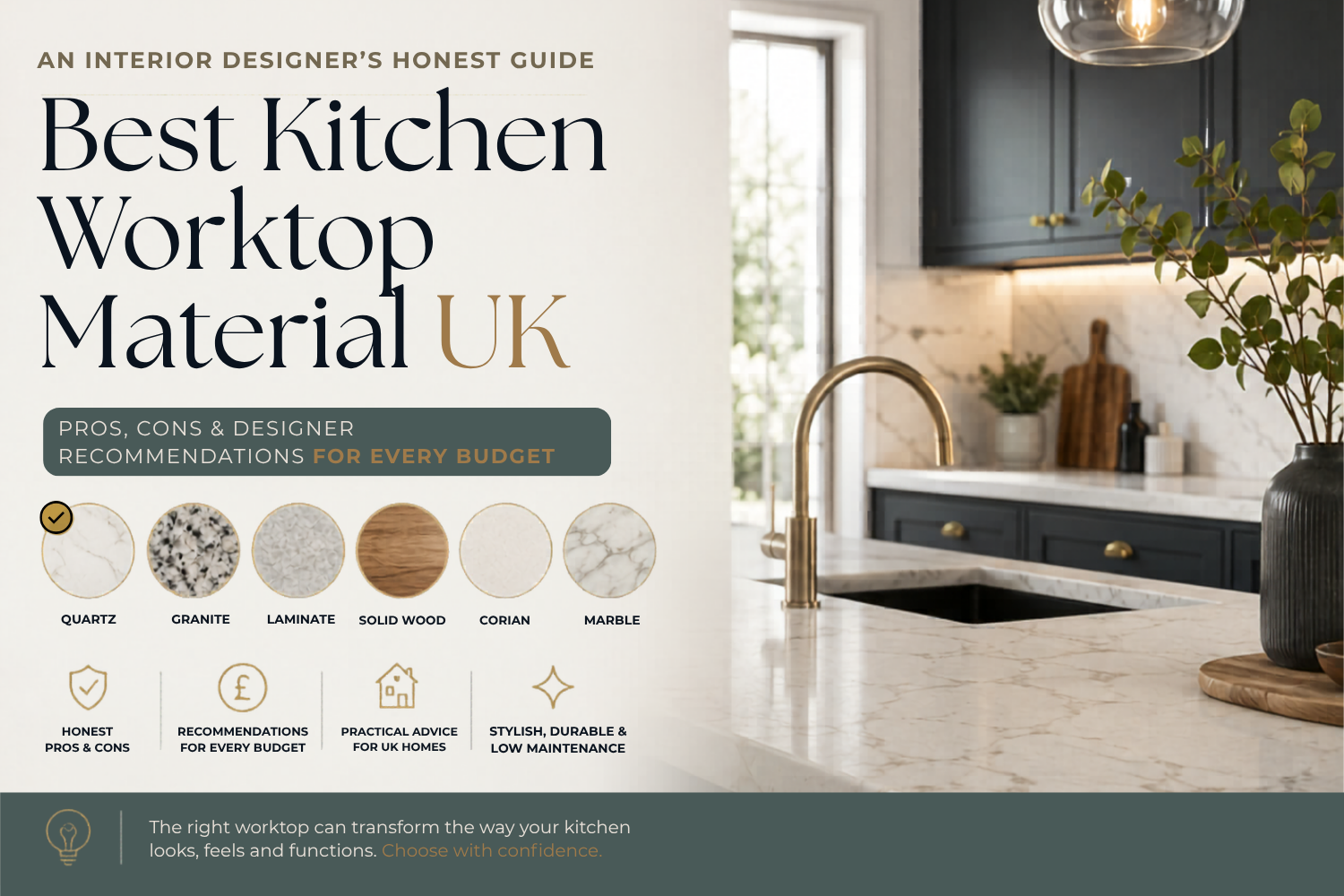
For most UK homeowners, quartz is the best kitchen worktop material. It's non-porous, durable, low-maintenance, and available in finishes that convincingly replicate natural marble and stone — without the upkeep those materials demand.
That said, "best" isn't a fixed answer. It shifts depending on how your kitchen is used, what you're willing to spend, and the layout you're working with. A quartz worktop is the right call for a busy family kitchen with a £20,000 budget. A high-quality laminate is the right call for a £5,000 renovation — and it will perform well if you treat it properly.
As an interior designer specialising in kitchen design, I've specified worktops across dozens of projects. I've seen what lasts, what disappoints, and what looks stunning in a showroom but causes daily frustration by year two. This guide covers the most popular materials — quartz, laminate, granite, solid wood, Corian, and marble — with honest pros, cons, and my designer recommendations for every budget.
Start Here: What to Assess Before Choosing a Worktop
Before we talk about materials, there's a more important question: how is your kitchen actually used?
Every time a new client comes to me with no strong preference yet, the first thing I assess is their lifestyle — how busy the kitchen is, how many people are cooking, and whether the family has support with cleaning and maintenance. A worktop that works beautifully for a couple who cook occasionally is a poor choice for a family of five with young children.
High-traffic kitchens need surfaces that can handle spills, heat, scratches, and heavy use without constant upkeep. Quieter households have more freedom to choose materials that require a little more care in return for exceptional beauty.
For more on how kitchen layout affects the way a space functions, read Which Kitchen Design Is The Most Efficient?.
The Most Popular Kitchen Worktop Materials Compared
Quartz
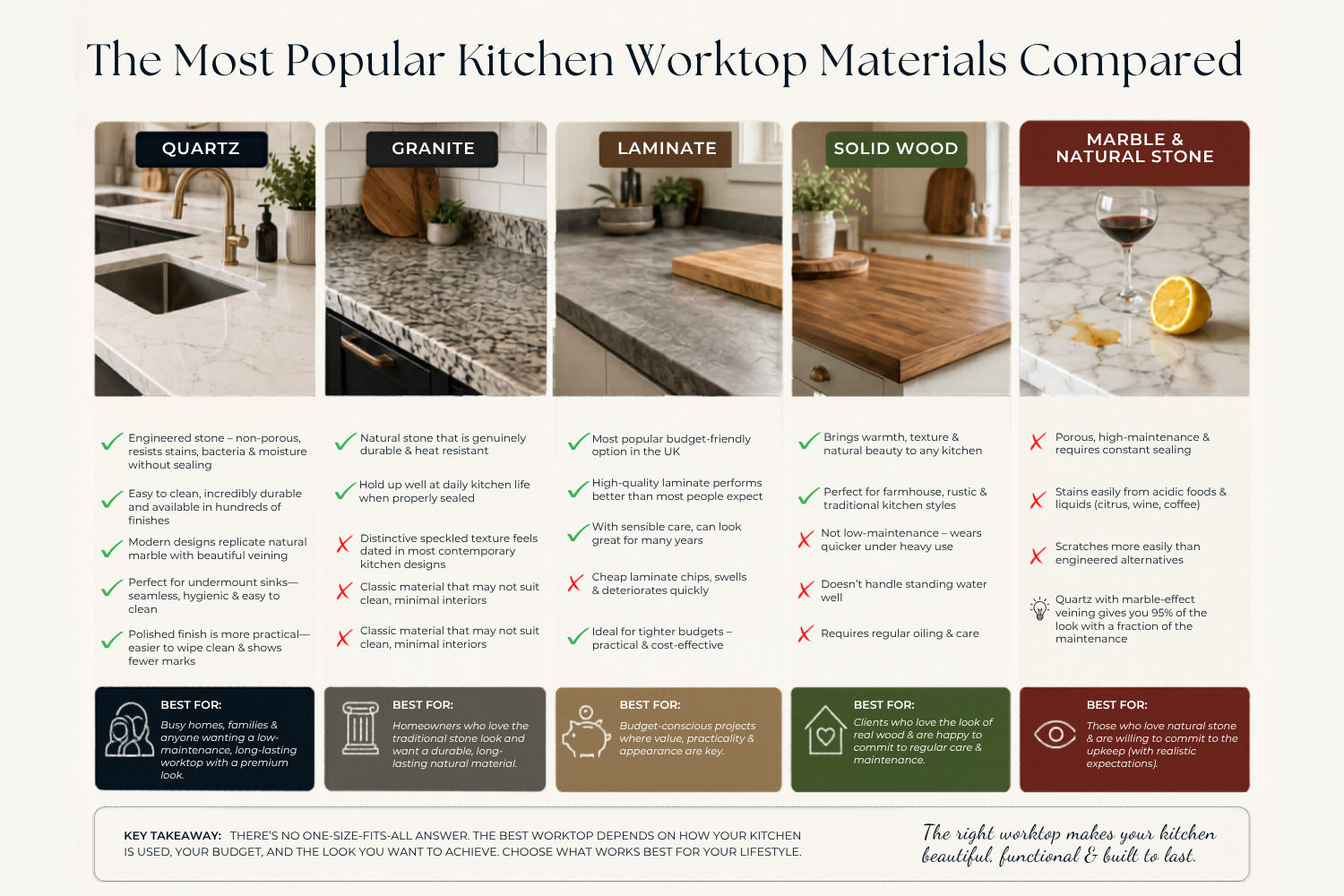
Quartz is my top recommendation for most clients, and for good reason. It is an engineered stone — real quartz particles bonded with resin — which means it combines the look of natural stone with a non-porous surface that resists staining, bacteria, and moisture without needing to be sealed.
From a practical standpoint, quartz is easy to wipe clean, incredibly durable, and available in hundreds of finishes. Crucially, modern quartz ranges include designs that genuinely resemble the veining and texture of natural marble — so you can achieve that luxurious aesthetic without the high maintenance.
One detail that often gets missed: quartz opens up the option of an undermount sink. Because the surface is non-porous and seamless around the cutout, there's no seal between the sink and worktop to harbour grease and grime. It's a significant hygiene and cleaning advantage that I recommend to almost every client.
In terms of finish, polished quartz is generally more practical than matt — it's easier to wipe down and shows fewer marks from everyday use.
Granite
Granite is a genuinely durable, easy-to-maintain natural stone. It resists heat well and, when properly sealed, holds up to daily kitchen life. Historically, it was the premium worktop of choice.
My honest take: granite's distinctive speckled texture feels dated in most contemporary kitchen designs. It's a classic material, but it doesn't blend easily with the clean, minimal interiors that most clients are drawn to today. If you love the look and it fits your kitchen style, it remains a solid, long-lasting choice.
Laminate
Laminate is the most popular budget-friendly worktop material in the UK — and when it's high quality, it performs better than most people expect.
I lived with a laminate worktop for five years. With sensible care — always using a cutting board, using hot pan pads, and not leaving liquids sitting for extended periods — a good-quality laminate worktop can hold up remarkably well and look as clean as the day it was fitted. The key word is quality: cheap laminate chips, swells, and deteriorates quickly. Mid to high-end laminate is a completely different proposition.
For a tighter budget, laminate is absolutely a viable, practical choice. For a £5,000 kitchen, it is what I would recommend without hesitation.
Solid Wood
Wood is beautiful — there's no disputing that. It brings warmth and texture that no other material matches, and it suits farmhouse, rustic, and traditional kitchen styles exceptionally well.
However, wood is not a low-maintenance material. It wears relatively quickly under heavy kitchen use, doesn't handle standing water well, and requires regular oiling and care. If you love the aesthetic and are committed to looking after it, wood can be wonderful. If you want something you can wipe down and forget about, it's not the right choice.
For kitchen styles that work well with wooden worktops — shaker kitchens, country-style designs, barn conversions — the look is hard to beat. Just go in with honest expectations.
Marble and Natural Stone — The One I'd Steer You Away From
Marble is the material clients most often fall in love with on Pinterest — and the one I most often recommend reconsidering. Marble is porous, high-maintenance, and requires constant sealing. It stains readily from acidic foods and liquids — citrus, wine, coffee — and scratches more easily than engineered alternatives.
If the look of marble is what you're after, a high-quality quartz with marble-effect veining will give you 95% of the visual result with a fraction of the maintenance. It's one of the most common switches I make in client projects, and they're always glad of it.
Quartz vs Laminate: Which Is Better?
This isn't a fair fight — they serve different budgets and different expectations. But here's how they compare honestly:
• Durability: Quartz wins. It is harder, more scratch-resistant, and more heat-tolerant.
• Maintenance: Both are easy to maintain day-to-day. Laminate requires slightly more care around water and heat.
• Appearance: Quartz offers a wider range of high-end finishes, including convincing stone effects. Quality laminate has improved significantly and can look very good.
• Undermount sink: Quartz only. Laminate cannot accommodate an undermount sink.
• Cost: Laminate is significantly cheaper. For a budget kitchen, it offers excellent value.
My recommendation: if the budget allows, choose quartz. If you're working with a tighter budget, don't dismiss laminate — just buy the best quality you can afford.
Quartz vs Corian: Which Is Better?
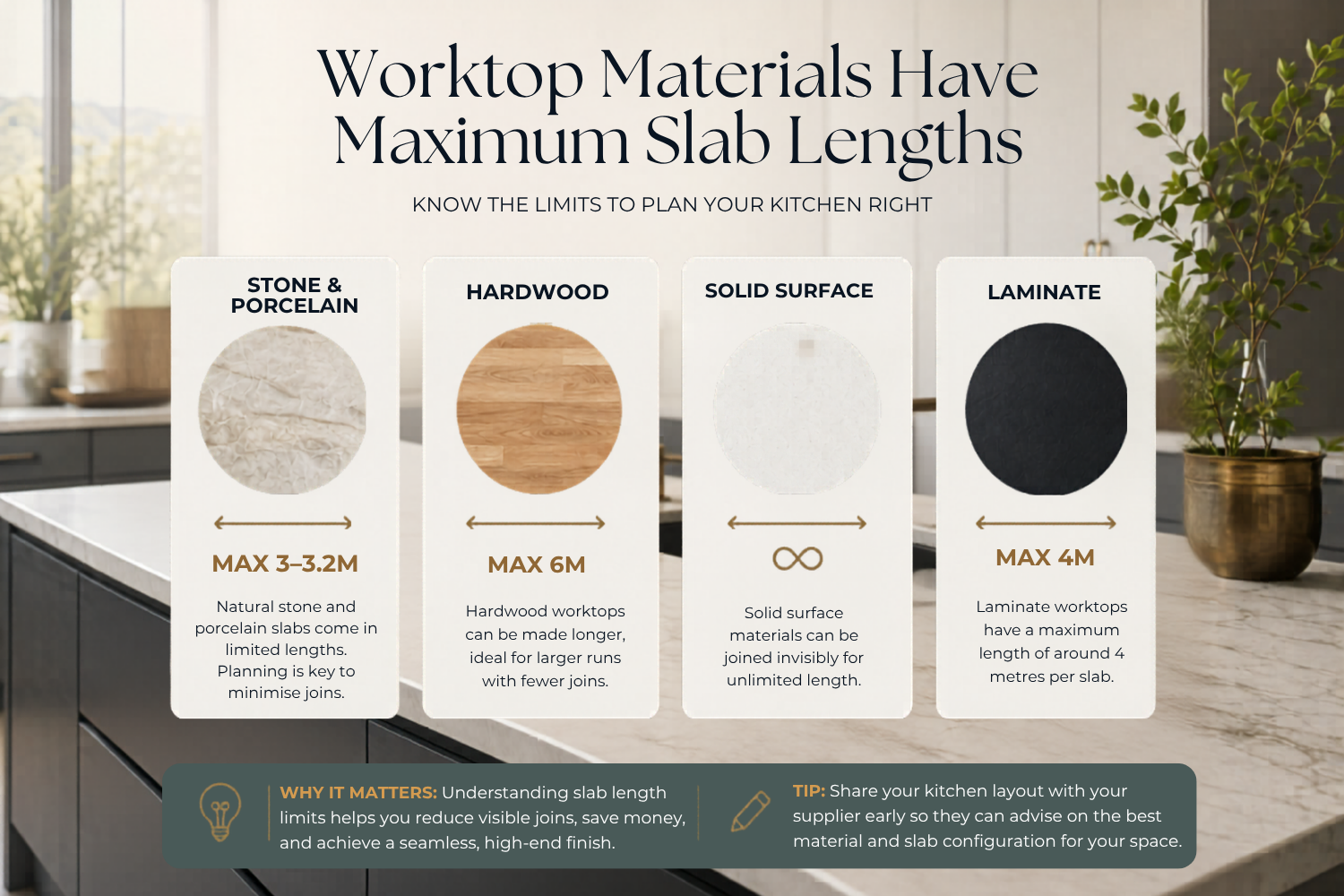
Corian (and similar solid surface materials) have genuine advantages. The biggest: Corian can be fabricated in any length with no visible seam. For long runs of worktop, this is a real benefit. It's also waterproof, non-porous, and easy to clean.
Where Corian falls short compared to quartz: it is less heat-resistant and you need to be careful with hot pans and pots. There's also a tactile difference — Corian has a slightly plastic feel underhand that some clients notice and dislike once they've handled natural or engineered stone.
For most kitchen projects, quartz is the stronger all-round performer. Corian is worth considering where seamless length is a specific requirement — such as very long island worktops.
The Detail Most People Miss: Seamless Length
Here's something that doesn't appear in most worktop comparison guides, but it matters in every project: every material has a maximum seamless slab length.
Before committing to a worktop material, you need a kitchen layout first — so you understand where seams will fall, whether they'll be visible, and whether the material you love can actually span the run you need without a join. This is the second question I ask every client, after lifestyle.
Getting the layout right before specifying materials is something I work through in detail with every client. If you'd like help with your kitchen layout, take a look at the Kitchen & Open-Plan Interior Design service.
What's Trending in Kitchen Worktops Right Now?
Quartz continues to dominate — and it's easy to understand why. Stone has always been the natural material for kitchen worktops; its ability to withstand the wear, heat, and moisture of daily cooking is proven. Quartz takes those properties and adds the consistency and adaptability of engineering.
In terms of colour and finish, light, neutral tones are leading — white and grey backgrounds with subtle veining are the most popular choices. These palettes bring a feeling of cleanliness and lightness to the kitchen, and they're genuinely timeless. Dark worktops are less popular right now, though they can be a striking accent choice in the right kitchen style paired with the right cabinetry.
On finish: polished is more practical than matt. Matt finishes can be harder to keep clean in a busy kitchen. If aesthetics are your priority, matt is beautiful — just be prepared to maintain it.
Which Worktop for Your Budget?
A simple, honest guide:
• £5,000 kitchen: Laminate. Buy the best quality you can afford, care for it properly, and it will serve you well.
• £20,000 kitchen: Quartz. It's the right material at this level — durable, beautiful, low-maintenance, and it unlocks features like undermount sinks that elevate the whole kitchen.
The principle is the same regardless of budget: don't compromise on worktop quality. It's the most-used surface in your home. Get it right.
Frequently Asked Questions About Kitchen Worktop Materials
What is the best kitchen worktop material in the UK?
For most households, quartz is the best all-round kitchen worktop material. It's non-porous, durable, low-maintenance, and available in a wide range of finishes including convincing stone effects. For tighter budgets, high-quality laminate is a practical and cost-effective alternative.
What is the downside to quartz worktops?
Quartz can be damaged by extreme, prolonged heat — always use a trivet or pan stand rather than placing very hot pans directly on the surface. It's also heavier than laminate, which needs to be factored in during installation. Cost is higher than laminate, though the longevity and low maintenance often justify the investment.
Which is cheaper: quartz or laminate?
Laminate is significantly cheaper than quartz. It's the worktop of choice for budget kitchens and, when good-quality, performs well with proper care. Quartz represents a mid-to-premium investment, but offers greater durability and a wider range of high-end finishes.
What worktop material should I avoid?
Marble and unsealed natural stone are the materials I most often advise clients to reconsider. They're porous, stain easily from acidic foods and liquids, and require regular sealing and careful maintenance. For the marble look without the upkeep, a marble-effect quartz is almost always the better choice.
Can I have an undermount sink with a laminate worktop?
No — undermount sinks require a non-porous, seamless surface that can be precisely cut and finished around the bowl. Laminate cannot be fitted with an undermount sink. Quartz (and other solid surface materials) is the right choice if an undermount sink is a priority.
Need Help Choosing the Right Worktop for Your Kitchen?
Choosing a worktop material is only one part of designing a kitchen that genuinely works. The layout, the sink position, the seam placement — all of it connects. Getting the specification right from the start saves costly mistakes later.
If you're planning a kitchen renovation in Birmingham, Solihull, or anywhere across the Midlands, I'd be glad to help. The Kitchen & Open-Plan Interior Design service covers material specification, space planning, and full layout design — so every decision is made in context, not in isolation.
You might also find these articles helpful:
• How to Size a Kitchen Island Properly
• Kitchen Colours 2026: What's In This Year?
A well-chosen worktop doesn't just look beautiful on the day it's fitted — it makes your kitchen easier to live in, every single day.
