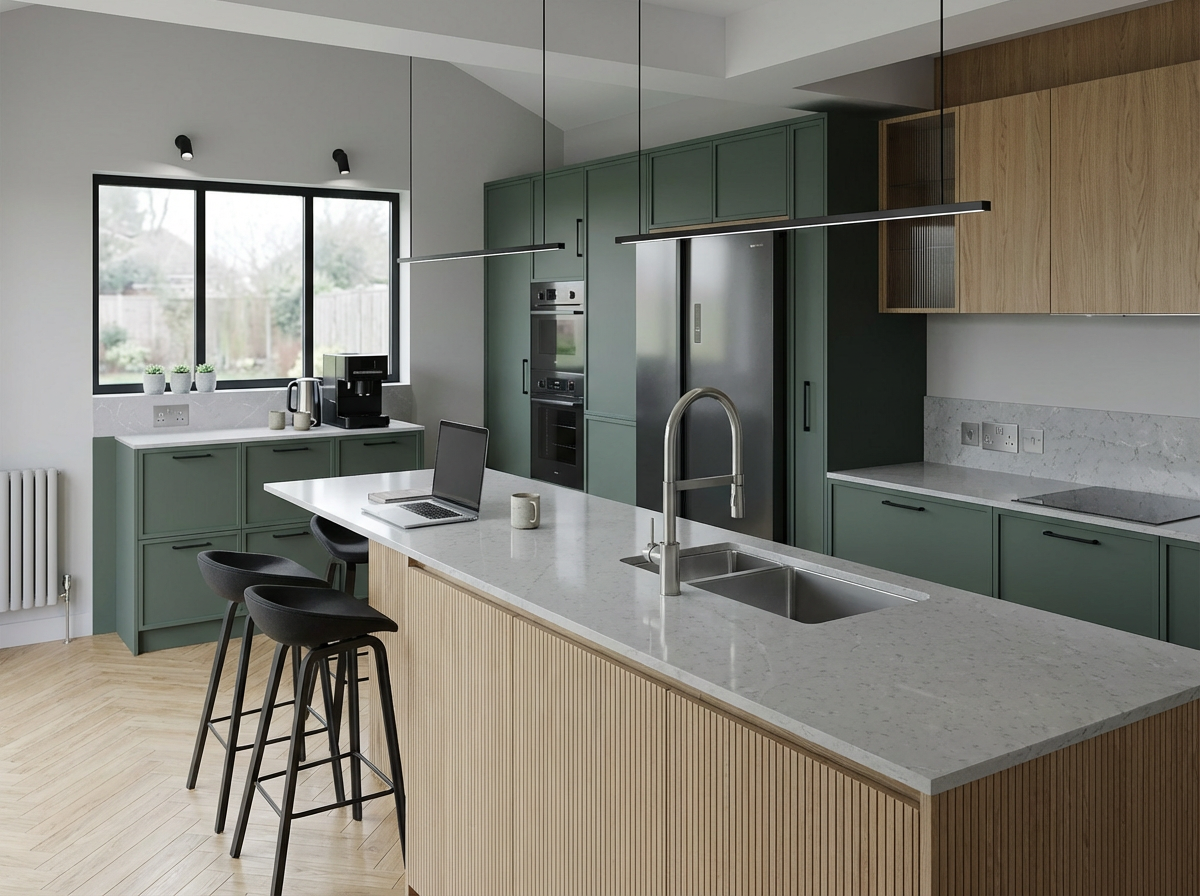
Open Plan Kitchen & Dining Layout Transformation – Birmingham
A space planning project for a family home in Hollywood, Birmingham — transforming a disconnected kitchen and dining layout into a cohesive open-plan space
Project Overview
Location: Hollywood, Birmingham, UK
Property Type: Detached house (3 bedrooms)
Project Scope: Kitchen & Dining Concept Design
Project Stage: Concept & Design Phase
This project focused on transforming two separate spaces — a compact kitchen and an adjacent dining room — into a cohesive, functional open-plan layout tailored for modern family living. The property is a detached home in Hollywood, a residential suburb in the south of Birmingham — an area where many families are choosing to extend and reconfigure rather than upsize.
The Client Brief
The project was developed for a family of four — a couple with two young children — who wanted to create a more social, practical kitchen-dining area.
Their main goals were:
• A united kitchen and dining space for everyday family life
• An open-plan layout suitable for entertaining
• A kitchen island with seating
• A walk-in pantry for additional storage
• Plenty of integrated storage throughout
• Materials that are durable, practical, and easy to maintain
The project also included extending the kitchen footprint by replacing an outdated conservatory.
The Starting Point
The existing layout consisted of two enclosed rooms:
• Kitchen: approx. 11.6 sq.m
• Dining room: approx. 12 sq.m
In addition, there was a conservatory at the rear of the property that was rarely used due to poor thermal performance — too hot in summer and too cold in winter.
Overall, the space felt:
• disconnected
• restrictive
• underutilised
Despite having a reasonable footprint, it did not support modern family living or social interaction. This is a pattern seen across many Birmingham homes of this era — the layout made sense for a different way of living, but no longer reflects how families actually use their kitchen and dining spaces today.
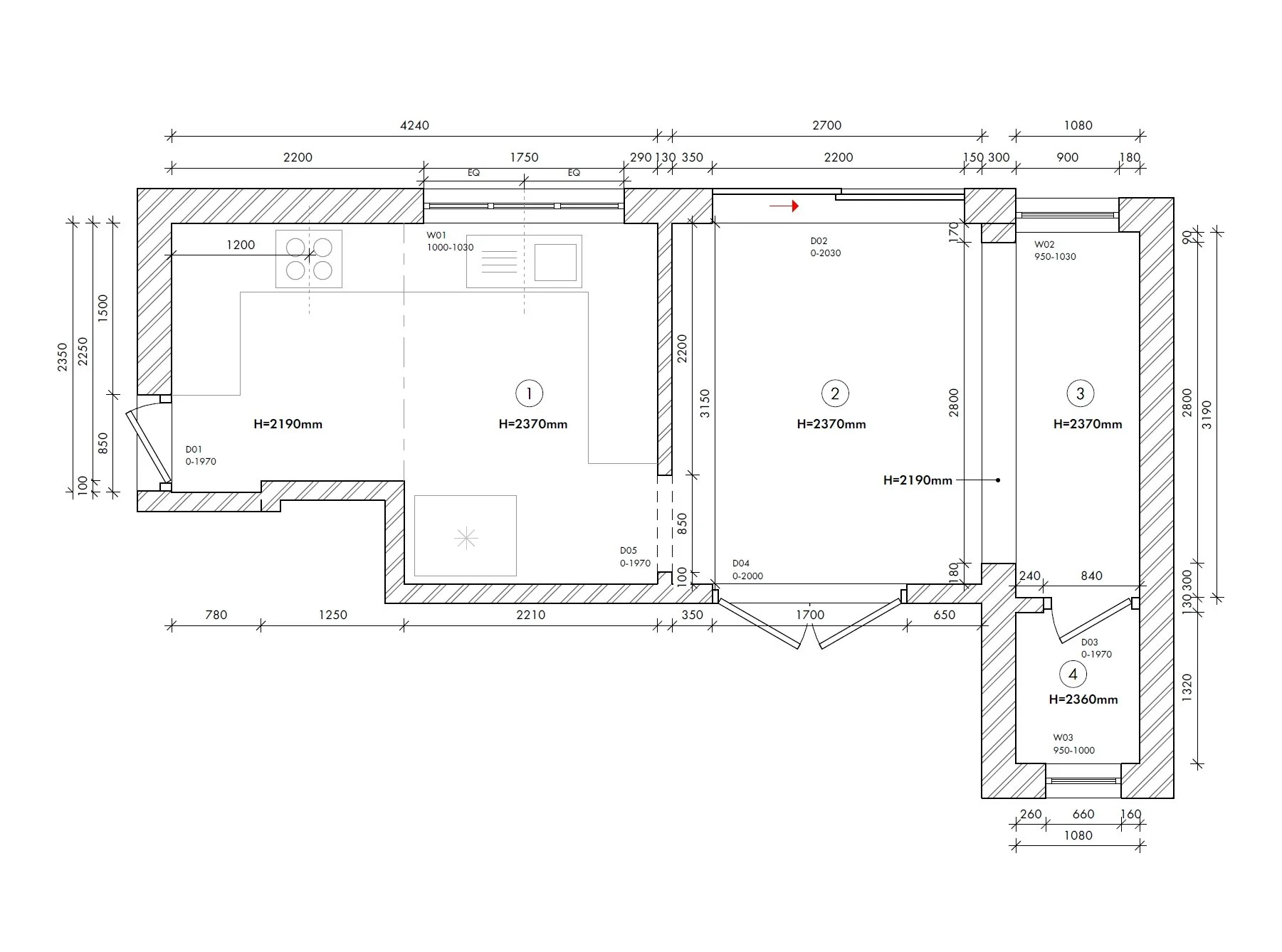
Existing layout before redesign – separate kitchen and dining spaces with limited flow
Key Challenges
The kitchen and dining room were completely separated
The kitchen felt compact and lacked usable workspace
The conservatory was not functional
Circulation through the space was inefficient
Storage was not optimised for a busy household
The Space Planning Solution
To unlock the full potential of the space, the approach focused on reconfiguring the layout rather than simply opening it up.
Extending the Footprint
The conservatory was removed and replaced with a new extension, adding approximately 12 sq.m of usable internal space.
This significantly improved the proportions and allowed for a more functional layout. For Birmingham homeowners considering a similar project, replacing an underperforming conservatory with a properly insulated extension is often one of the most cost-effective ways to gain meaningful internal space without moving.
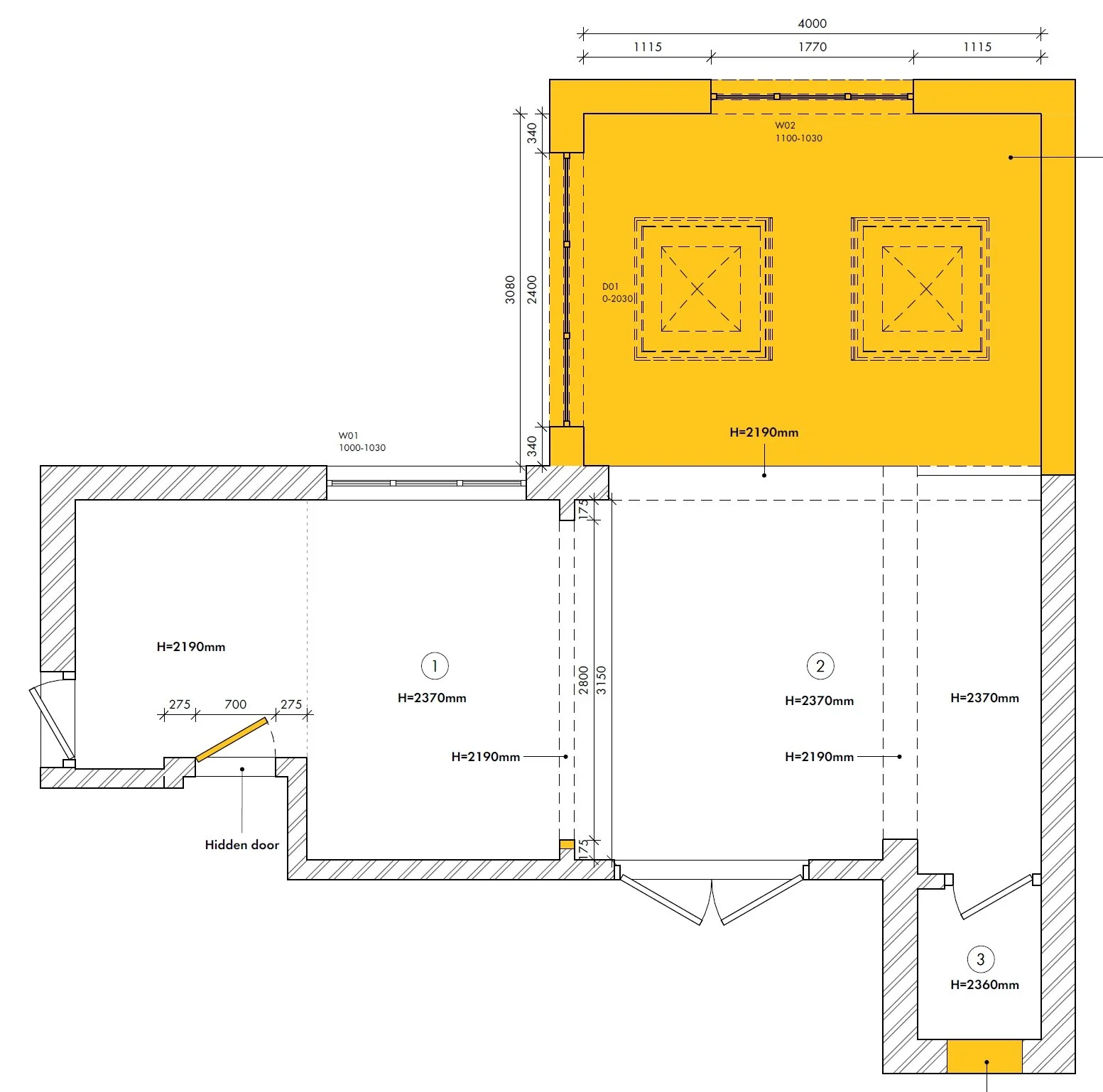
The new extension replaces the old conservatory, creating additional space for a more functional and open kitchen layout
Repositioning Kitchen and Dining Areas
Instead of keeping the original arrangement, the kitchen and dining areas were swapped:
The kitchen was relocated to the extended area, allowing for a more generous and functional layout
The dining area moved into the original kitchen space, creating a compact but well-defined zone
This decision was key to making the overall layout work efficiently.
Improving Circulation and Access
The new layout creates:
Clear and intuitive movement between zones
Direct access to storage areas
A more natural connection between the kitchen and dining
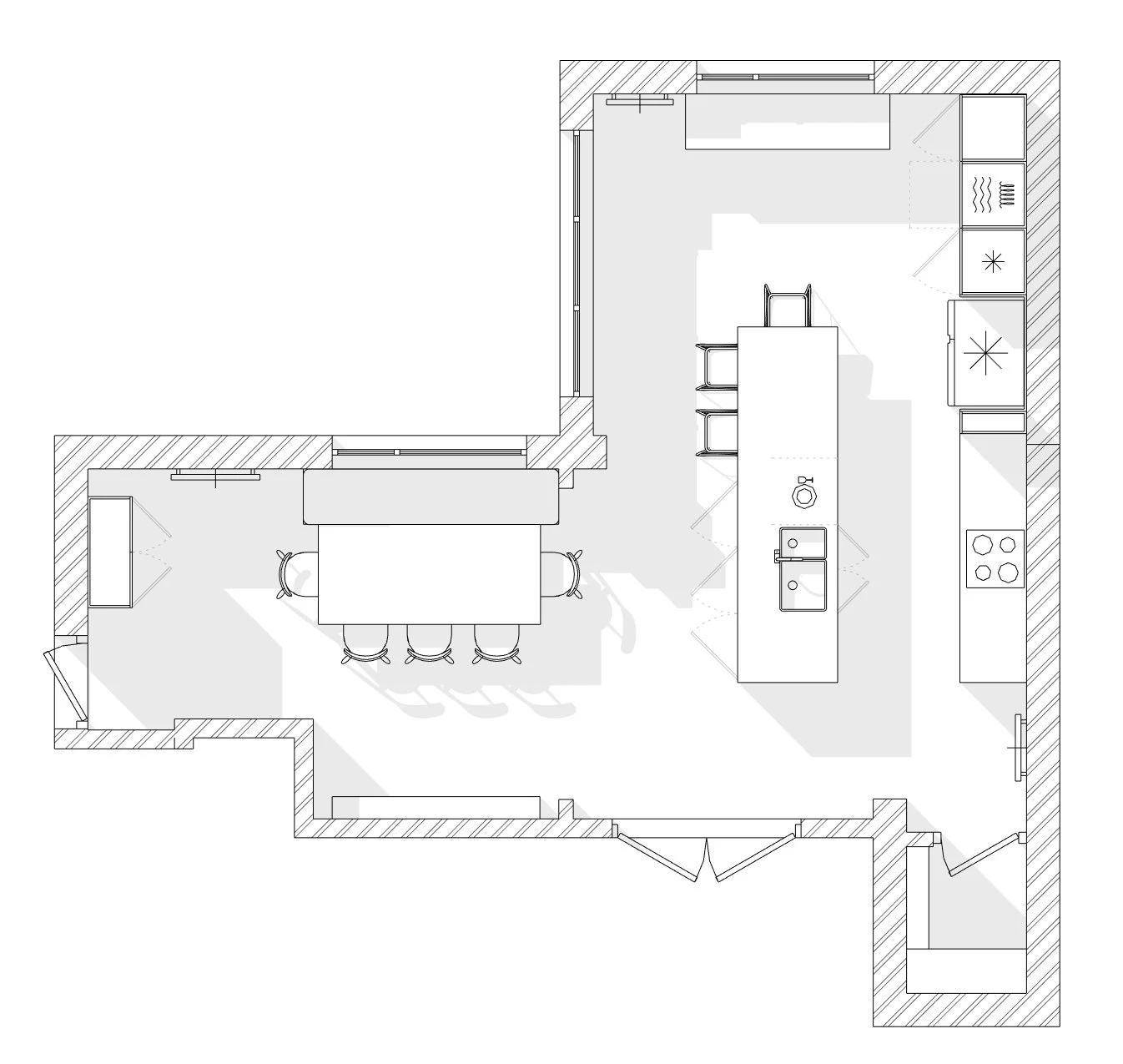
Proposed layout showing open-plan kitchen and dining with island, improved circulation, and integrated pantry
Introducing a Walk-In Pantry
A previously inefficient area was transformed into a walk-in pantry, now:
Easily accessible from the kitchen
Increasing overall storage capacity
Supporting a more organised and clutter-free main space
Designing a Functional Kitchen
Relocating the kitchen made it possible to include:
A central kitchen island with seating. Sizing a kitchen island correctly is one of the most common points where layouts go wrong — see the full island sizing guide here.
Clear separation between cooking, preparation, and dining areas
Smooth circulation for multiple users
Furniture & Functional Decisions
Dining bench seating under the window allowed for a larger table (up to 8 people) without requiring clearance on all sides
Kitchen island seating for three, supporting casual dining and flexible use
A dedicated coffee and hot drinks station was introduced
Tall cabinetry with integrated appliances
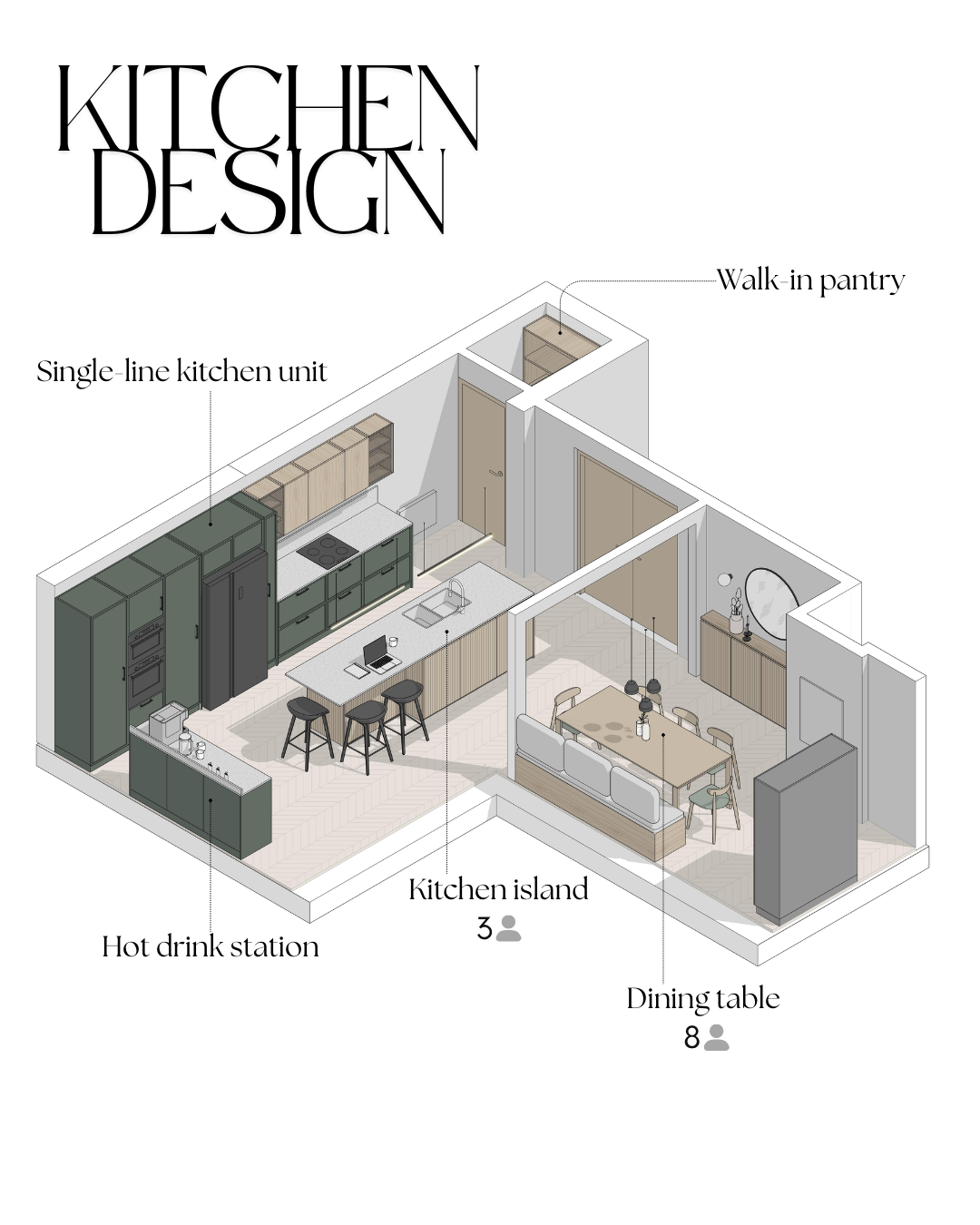
3D layout illustrating zoning of the open-plan kitchen and dining space, including island seating, walk-in pantry, and dedicated dining area
Design Development
With the layout resolved, the design focused on creating a space that feels calm, cohesive, and practical for everyday use. The material palette was developed to suit a family home in Birmingham — durable enough for daily life, but considered enough to feel designed rather than purely functional.
Material and Colour Palette
Sage green cabinetry adds depth and connects the space to the garden
Oak elements introduce warmth, with slatted oak detailing on the island creating a subtle focal point
Black accents provide contrast and definition
Fluted glass cabinetry adds lightness and a soft vertical rhythm
A neutral grey wall finish keeps the backdrop understated, allowing the main materials to stand out.
The result is a balanced, timeless aesthetic connected to its environment.
Sage green was chosen not just for its aesthetic — it's one of the most enduring kitchen colours of the moment. See the full kitchen colour guide for 2026 for context on why muted greens are replacing darker tones.
Practical Material Choices
Quartz worktops — durable, non-porous, and easy to maintain. For a full breakdown of why quartz was chosen over other materials, see the guide to the best kitchen worktop material in the UK.
Engineered wood flooring in a chevron pattern
A considered mix of laminate and painted MDF fronts, chosen for the balance they strike between durability and a genuinely handcrafted feel.
Every choice supports long-term usability.
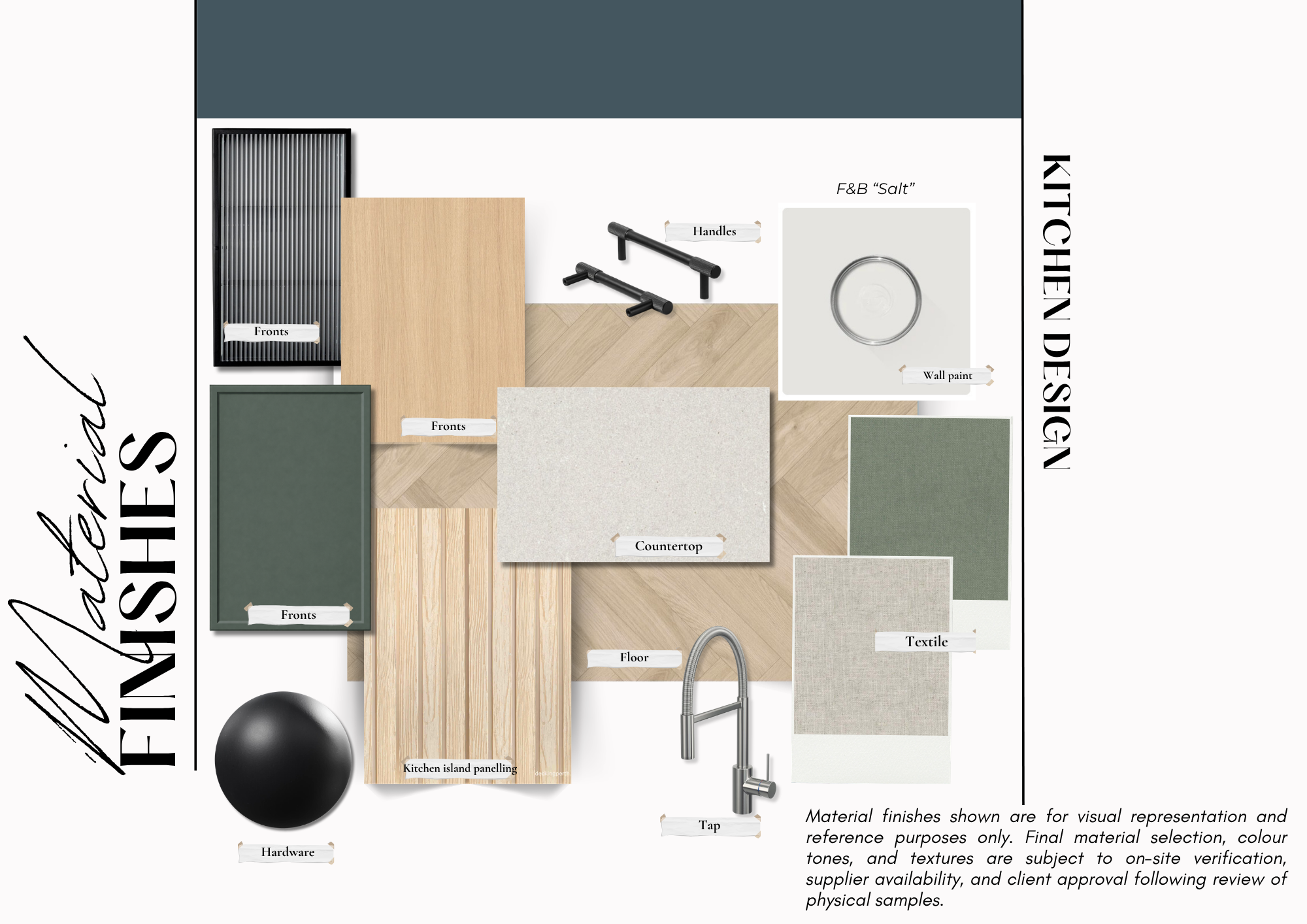
Material palette combining sage green cabinetry, natural oak, and durable quartz worktop, creating a calm and practical open-plan kitchen design
Lighting Strategy
Lighting was designed in layers:
Task lighting for kitchen worktops and the island ensures comfortable everyday use
Linear lighting above the island acts as both task and feature lighting
Pendant lighting above the dining table defines the dining zone and adds a softer, ambient feel
Wall lighting in the dining area creates a more intimate atmosphere
Additional lighting at the hot drinks station highlights this dedicated zone and improves usability
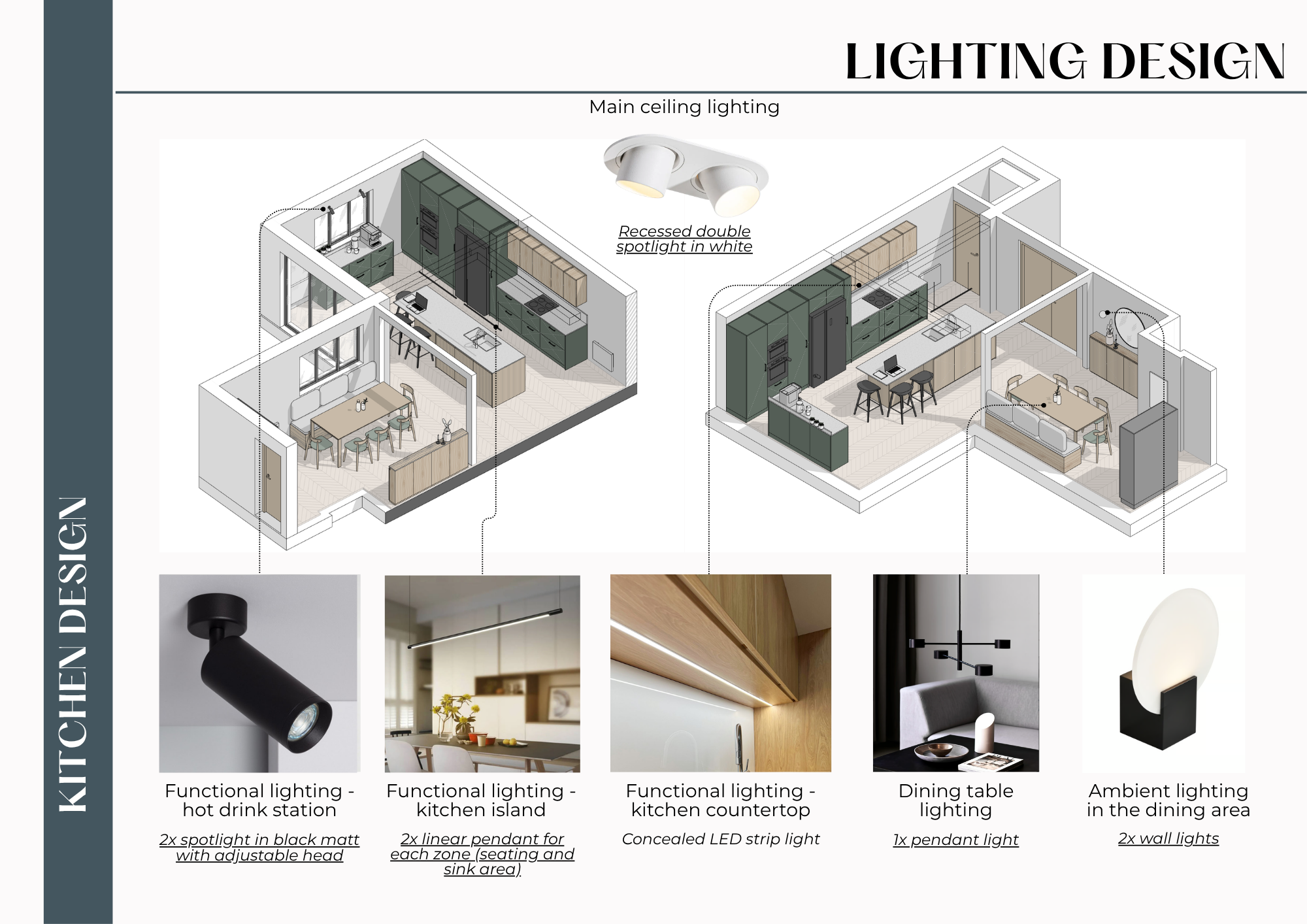
Lighting strategy designed in layers, combining task, feature, and ambient lighting to support different zones within the open-plan kitchen and dining space
Final Outcome
The transformation resulted in a spacious and highly functional open-plan kitchen and dining area.
The space increased from approx. 25 sq.m to 39 sq.m (including pantry)
The layout now supports cooking, dining, and socialising in one cohesive environment
The kitchen has become a central hub for family life
Circulation and zoning now feel natural and intuitive
What was once a disconnected layout is now a well-structured, practical, and welcoming space designed around how the family lives. This project is a good example of what's achievable in a typical Birmingham detached home when layout is treated as the starting point rather than an afterthought — before materials, finishes, or fittings are even considered.
If your home has a similar layout challenge, the starting point is always the floor plan.
How to Layout an Open Floor Plan — a practical guide for homeowners at the planning stage.
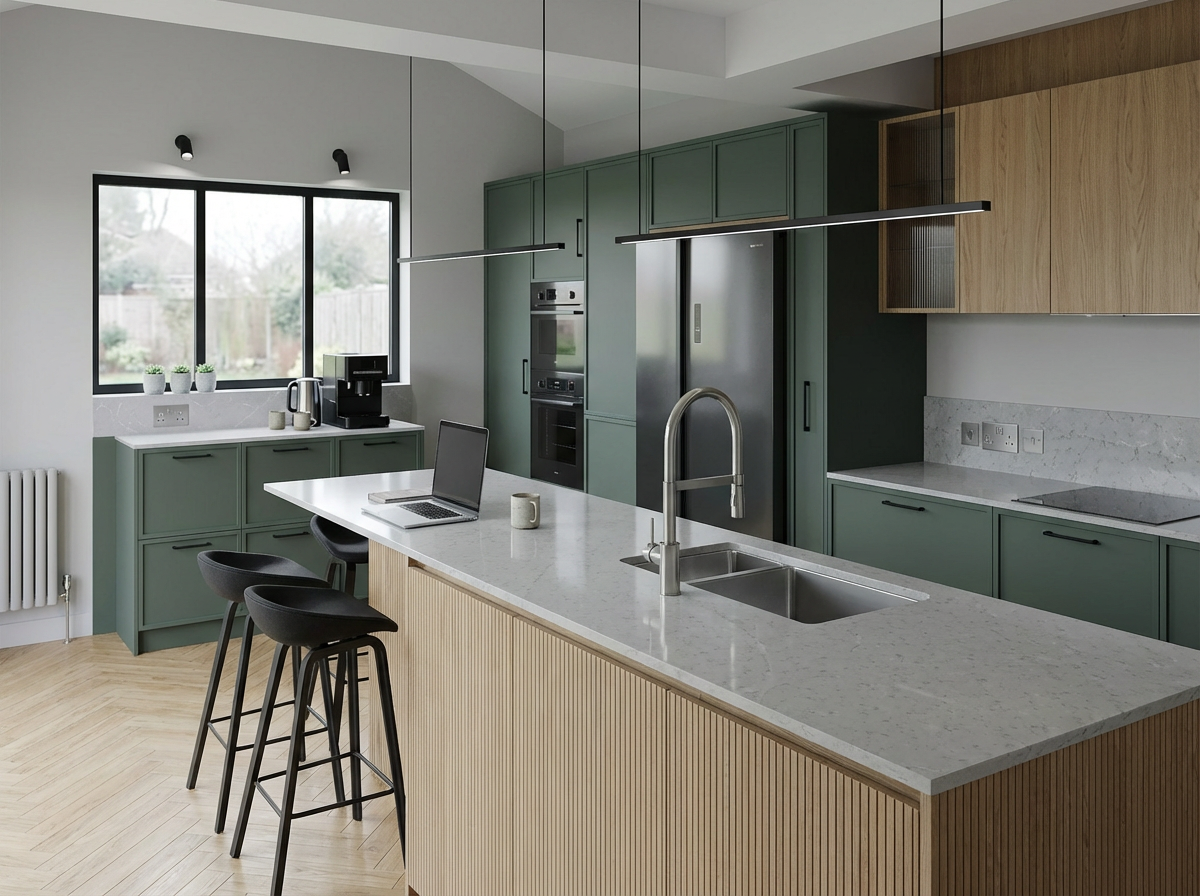
More Open-Plan Kitchen Projects
Planning an Open-Plan Kitchen in Birmingham?
Layout decisions made early save time, money, and costly mistakes later. If you're at the thinking or planning stage, this is the right moment to get the layout right.
Send me your floor plan and a few notes on what you're hoping to achieve. I'll review your space and come back to you with initial thoughts — no obligation, no sales pitch.